
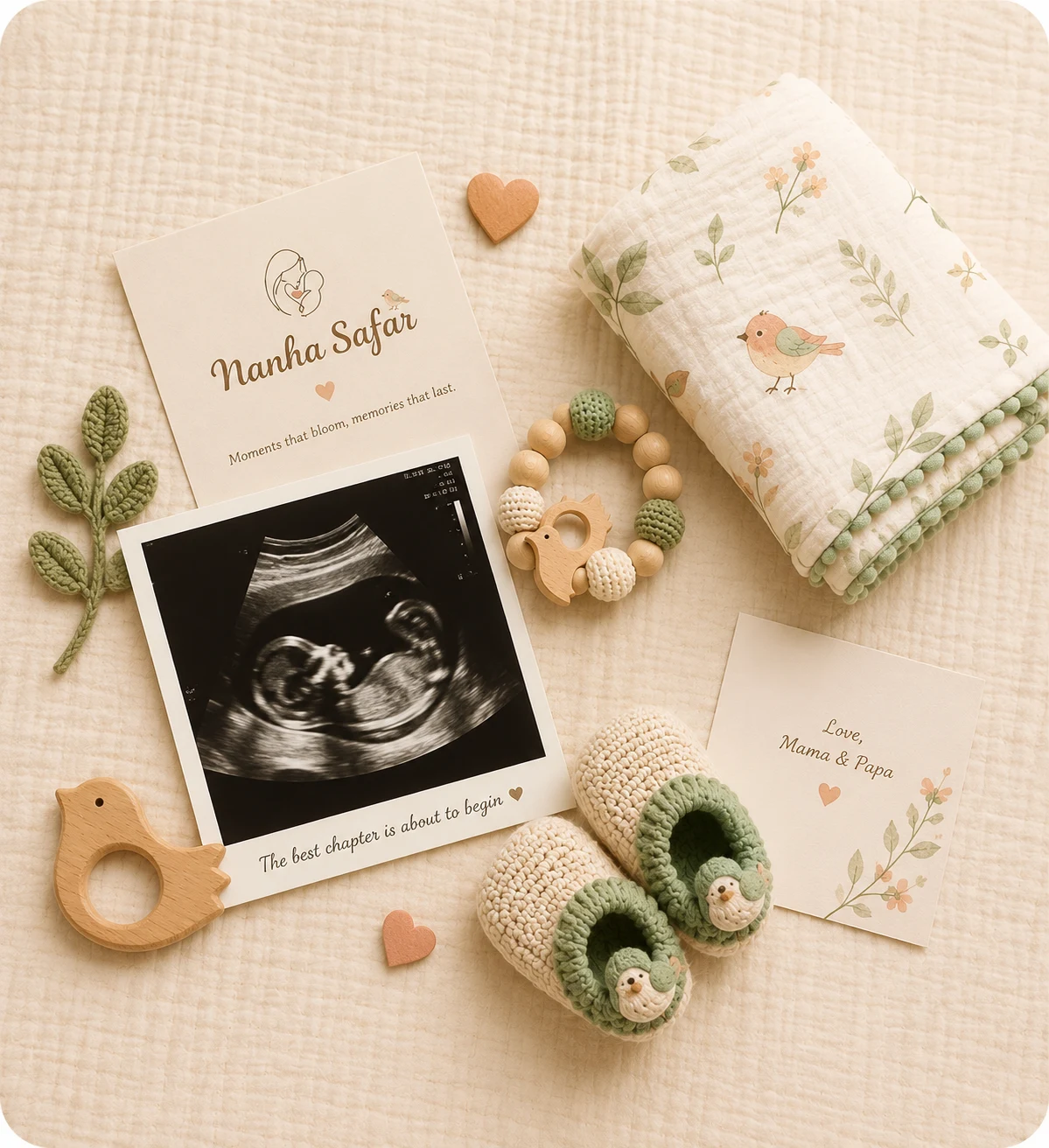
In the middle of it, you are certain you will remember. The weight of her asleep on your chest. The exact sound of his almost-laugh, the one that came before the real one. It feels unforgettable because, in that moment, it is everything.
But memory is kind and careless at once. It keeps the shape of a year and lets go of the details. Ask any parent of a five-year-old what their baby's cry sounded like at three weeks. They remember that it was hard. They rarely remember the sound.
Memory keeps the shape of a year and lets go of the details.
This is not a failing. The first year asks so much of you that forgetting is part of how you survive it. Sleep arrives in fragments. Days blur into feeds and walks and small emergencies. The mind, doing its quiet triage, holds on to what it must and releases the rest.
The details it releases are the ones you will want most. Not the milestones, which photographs and family lore tend to keep anyway, but the texture between them. The way you held the bottle. The song you hummed without noticing. What the room smelled like after a bath.
Write it down while it is still warm. I will keep it exactly as you left it.
A written line does what the mind cannot. Three sentences on an ordinary Tuesday will hold that Tuesday still for thirty years. When your child reads it one day, they will not find a summary of their first year. They will find an afternoon of it, kept whole.
You do not need to write well. You only need to write soon. The smallest things leave first.